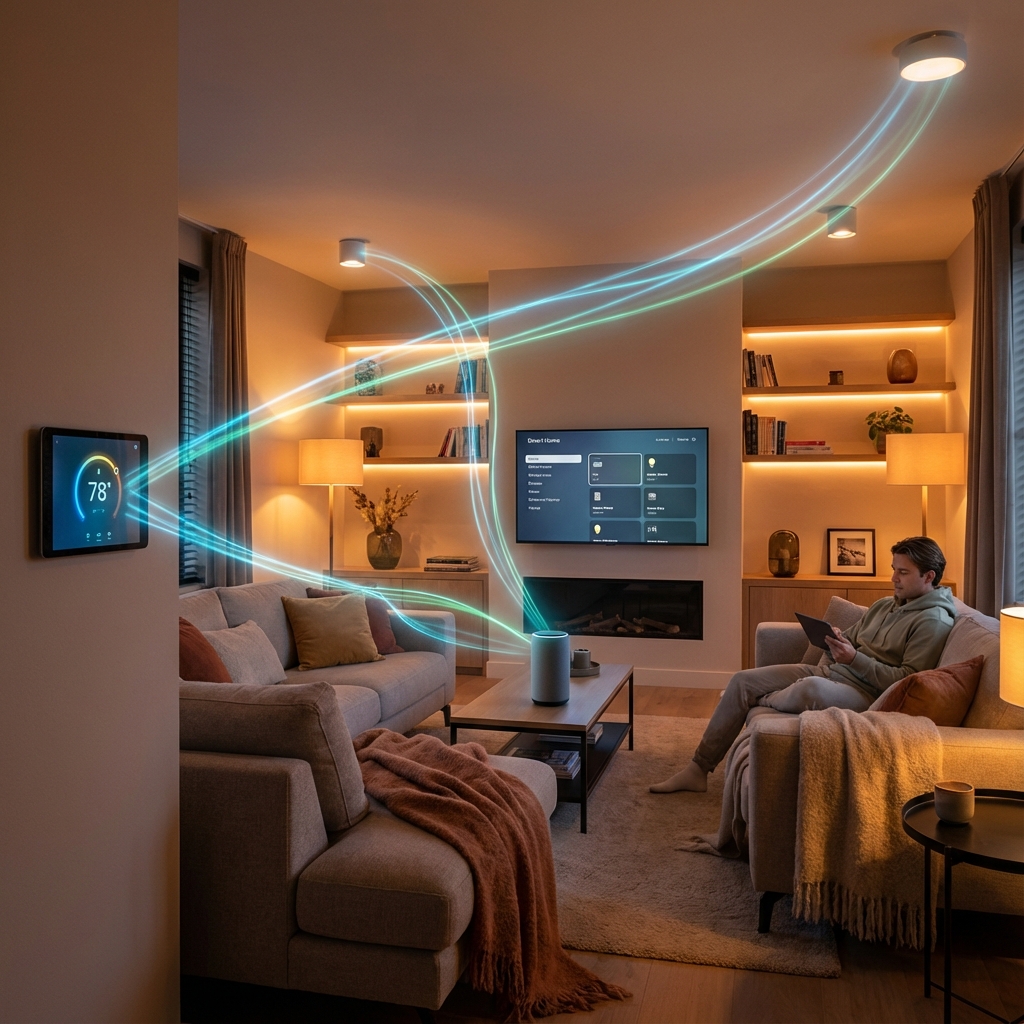
You hear the term "IoT" thrown around in tech news all the time. But what does it actually mean for a resident of Botad? Is it just hype, or is it changing your life?
Simply put, the Internet of Things (IoT) refers to physical objects ("things") that are embedded with sensors, software, and other technologies to connect and exchange data with other devices and systems over the internet.
Beyond Computers and Phones
Historically, the internet was people talking to people (email) or people talking to machines (web browsing). IoT is machines talking to machines (M2M).
- Smart Home: Your AC turning on automatically when your GPS shows you are 1km from home.
- Wearables: Your Fitbit sending health data to your doctor.
- Agriculture: Soil sensors in farms telling irrigation systems exactly when to water the crops.
- Smart Cities: Streetlights that dim when no one is around to save electricity.
The Challenge: Device Density
In 2010, the average home had 3 connected devices. Today, it's over 15. By 2030, it could be 50. Lightbulbs, plugs, vacuums, TVs, doorbells—everything wants WiFi.
This creates a problem called "Congestion." Older routers and copper networks can't handle 50 devices talking at once. It's like a crowded room where everyone is shouting.
Why Fiber is the IoT Backbone
To support an IoT-driven life, you need two things:
- High Concurrency: A network that can manage thousands of active sessions.
- Low Latency: Immediate response times (e.g., your smart lock unlocking instantly when you press the button).
Sky Digital's fiber network and our provided Dual-Band routers are optimized for this high-density future.